About us
Mount Elbrus
Europe’s highest peak and a classic Seven Summits objective
5,642m · West Summit · Snow & ice ascent · South route · High-altitude expedition
Overview
An expedition to Mount Elbrus, the highest peak in Europe and Russia, is a dream objective for many mountaineers. Rising to 5,642 meters in the Caucasus Mountains, Elbrus is one of the world's Seven Summits and a classic introduction to high-altitude expedition climbing — calling to mountaineers and thrill-seekers alike with its vast glaciers, icy slopes, and breathtaking ridgelines.
The standard ascent follows the south side, where the route is more gradual and supported by mountain infrastructure such as cable cars and refuges. Even so, the climb remains demanding: summit day is long, the terrain is glaciated, and climbers must be prepared to move confidently in snow and ice with crampons and an ice axe.
Over 8 days, the itinerary is designed to balance acclimatisation, skill review, and summit readiness. With a mountain hotel, refuge accommodation, and structured support from guides and team leaders, this is a strong and efficient Elbrus program for climbers seeking both challenge and comfort.
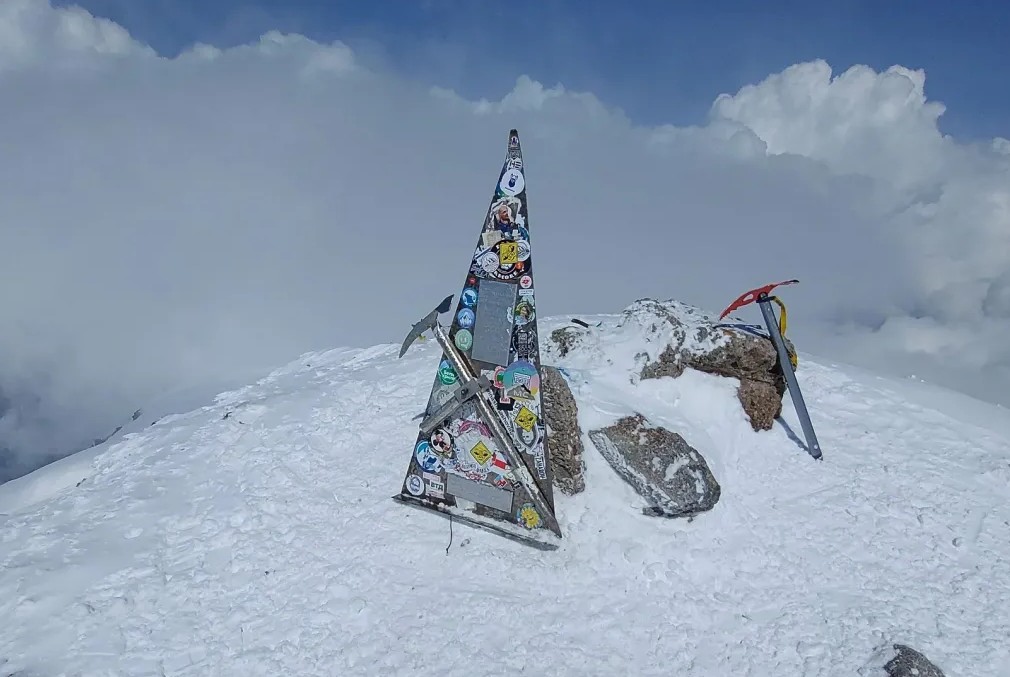
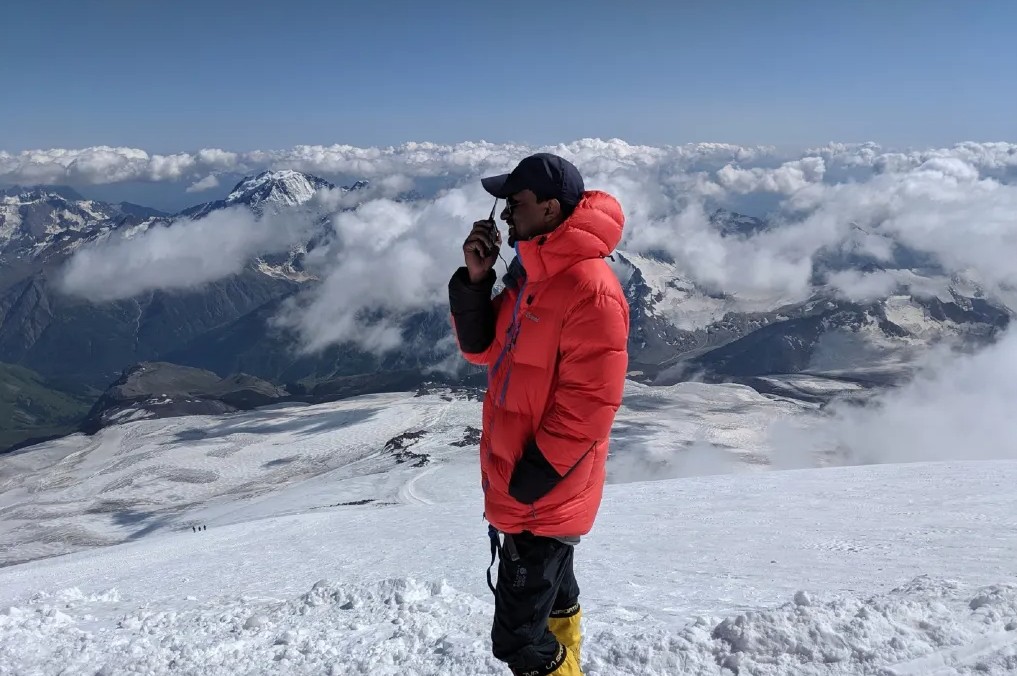
Reaching the summit is an awe-inspiring moment — standing above the clouds, you witness panoramic views of the wild Caucasus Range stretching as far as the eye can see. The sense of achievement is indescribable, as you conquer not just a mountain, but one of the world's most iconic peaks.
Beyond the climb itself, the region offers a rich cultural immersion into the traditions of the Balkars, Karachays, and Circassians — the proud indigenous communities of the Caucasus — with legendary hospitality, folklore, and mountain cuisine.
The best season for climbing Elbrus is June to September, when conditions are most stable. However, Elbrus is notorious for sudden storms and freezing winds — proper preparation and expert guidance are essential.
Mountain Notes & Curious Facts
First ascents: The first recorded ascent of Elbrus’ east summit was made in 1829, while the higher west summit was first climbed in 1874. This makes Elbrus one of the great historic mountaineering objectives of Europe and the Caucasus.
Technical character: On the standard south route, Mount Elbrus is often considered a non-technical or lightly technical snow climb compared with steeper alpine peaks. However, it is still a serious mountain due to altitude, glaciated terrain, strong winds, freezing temperatures, and rapid weather changes. Many climbers underestimate Elbrus because of its accessibility.
Where it sits among famous peaks: At 5,642m, Elbrus is lower than the 6,000m, 7,000m, and 8,000m expedition categories, but it remains one of the most famous mountains in the world because it is the highest peak in Europe and one of the classic Seven Summits.
Gallery
On the mountain
Local mountain guides
Group transport
Mountain refuge
Altitude + weather
1 summit attempt
Route & Terrain
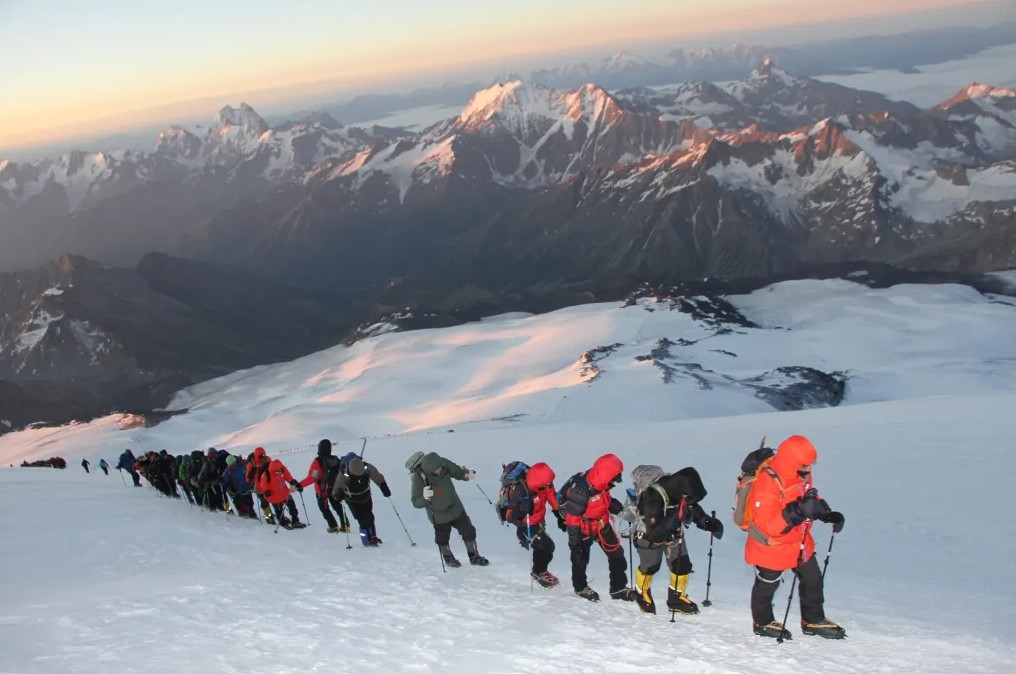
The standard south-side route is the most common approach, using lifts and refuge access to make the climb more efficient. Terrain includes snow slopes, glacier travel, and a long summit day on the upper mountain.
Skills & Equipment
This expedition includes ice and snow practice with crampons and ice axe. Even though the route is not among the most technical alpine climbs, efficient movement and solid mountain habits are essential.
Weather & Acclimatisation
Elbrus is famous for rapid weather changes. Strong winds and sudden whiteout conditions can affect summit attempts. Acclimatisation hikes and the reserve day are critical to success.
Expedition Flow
Day-by-Day Itinerary
Welcome to Russia! Upon arrival at Mineralnye Vody Airport, a scenic 4.5-hour drive takes you to a charming mountain hotel nestled at the foothills of Mount Elbrus. Settle in, soak up the mountain air, and enjoy a relaxing evening before the climb ahead.
After a hearty breakfast, your team leader conducts a thorough gear check, ensuring everyone is well-equipped. Rental arrangements will be made if needed. Then you set off on an acclimatisation hike to either Cheget-3 (3,000m) or Terskol Peak (3,150m), depending on group fitness and weather conditions.
This hike helps your body adjust to altitude while offering breathtaking views of the Caucasus Mountains.
Move to the refuge using ski lifts — unnecessary luggage can be left at the hotel to minimise physical strain. A hot lunch prepared by our cook awaits on arrival. Post-lunch, we head up for an acclimatisation hike to 4,300m, testing endurance while enjoying panoramic glacier views.
Another crucial acclimatisation day as you hike up to Pastukhov Rocks (4,800m). This challenging trek prepares the body for summit night by familiarising climbers with higher altitude and boosting stamina. Return to the refuge for rest and recovery.
Technical review with your guide: crampons, ice axe work, movement on snow, self-arrest practice, and glissading (controlled sliding) on steep terrain. Suitable for both beginners and experienced climbers — essential preparation for summit day.
The moment you have been preparing for. The ascent begins around 3am, navigating glaciers and ridges toward Elbrus' West Summit (5,642m) — the highest point in Europe. Expect roughly 9 hours to the top and 5 hours back down.
If conditions allow and the group descends before 3pm, an optional transfer to the valley hotel can be arranged (extra cost). Otherwise, overnight at the refuge.
Buffer day in case summit day was affected by weather. If used for the climb, descent to the valley must happen the same evening as ski lifts stop operating at 4pm. Elbrus summit certificates are issued to celebrate your achievement.
After breakfast, transfer back to Mineralnye Vody Airport — carrying memories of an extraordinary expedition and the pride of summiting Europe's highest peak.
What's Included
✅ Included
- ✓Official local registration for foreigners
- ✓Group airport transfers (Mineralnye Vody – Terskol – Airport)
- ✓3 nights in a 3-star hotel at the base of Elbrus
- ✓4 nights in a luxury mountain refuge at Elbrus Base Camp
- ✓Cable car / ski lift tickets to Base Camp
- ✓Full-board meals throughout the expedition
- ✓Experienced Indian Team Leaders and local mountain guides
- ✓High guide-to-climber ratio on summit day
- ✓One summit attempt
- ✓Climbing certificate
- ✓National park / park fee
- ✓Tips for guides & porters included
❌ Not Included
- ✗Clothing & personal equipment
- ✗International flights
- ✗Visa processing and fees
- ✗Single occupancy supplement
- ✗Additional summit attempt after the first one is used
- ✗Extra hotel night if the expedition finishes early / descends differently
- ✗Mountaineering insurance (highly recommended)
- ✗Lunch & dinner at Azau
Ready for Mount Elbrus?
A structured route from first enquiry to summit attempt — designed to make a serious mountain objective simpler to plan.
How It Works — Step by Step ↗