About us

Mount Kinabalu
Via Ferrata — Low's Peak Circuit
4,095m · Low's Peak · UNESCO World Heritage Site · Highest mountain between Himalayas and New Guinea
Overview
Mt Kinabalu, in Sabah, Malaysia, is one of Southeast Asia's most iconic peaks — the highest mountain between the Himalayas and New Guinea. Rising to 4,095 m, it dominates the landscape and draws hikers, mountaineers, and nature lovers from around the world. The mountain sits within Kinabalu Park, a UNESCO World Heritage Site known for its incredible biodiversity and dramatic alpine terrain.
The climb is an exhilarating multi-day adventure, typically suited to fit and experienced hikers. Your journey includes two nights at Pendant Hut, the base for via ferrata participants, offering extra time to acclimatise and enjoy the unique mountain environment. From there, you'll make a pre-dawn push to Low's Peak, the highest point on Mt Kinabalu. The route takes you through lush rainforest, granite slabs, and steep, exposed sections — physically demanding but immensely rewarding.
For those seeking an additional surge of adrenaline, Mt Kinabalu features one of the world's highest via ferrata experiences. After summiting Low's Peak, climbers can descend via the ferrata — an exciting mix of iron rungs, cables, ladders, and cliff traverses fixed directly into the mountain. It's a spectacular and technical way to experience Kinabalu's vertical granite faces and adds a memorable twist to the traditional trek.
As with any high-altitude adventure, Mt Kinabalu comes with inherent risks. The elevation, unpredictable weather, and rugged terrain require proper preparation, training, and respect for the mountain. Extra time at Pendant Hut helps with acclimatisation, but it's still essential to carry the right gear and follow the guidance of experienced mountain leaders.
For those willing to take on the challenge, Mt Kinabalu offers an unforgettable blend of adventure, achievement, and breathtaking natural beauty — and the via ferrata descent transforms it into a truly once-in-a-lifetime mountain experience.
Expert Mountain Guides
Certified Kinabalu specialists with deep knowledge of terrain, weather, and via ferrata safety.
Smart Acclimatisation
Two nights at Pendant Hut to help your body adjust and maximise summit success.
Technical Training
Hands-on guidance for the via ferrata including equipment use, safety systems and movement techniques.
Immersive Local Experience
Connect with Sabah's culture and the unique biodiversity of this UNESCO World Heritage Site.
A Bucket-List Achievement
Sunrise on Low's Peak followed by one of the world's highest via ferrata descents.
Mountain Notes & Curious Facts
First recorded ascent: Mount Kinabalu was first successfully climbed in 1851 by Hugh Low, a British colonial administrator. Today it attracts tens of thousands of trekkers each year and remains Southeast Asia's most iconic high-altitude objective.
Technical character: Kinabalu is considered a high-altitude trek with a via ferrata descent. The summit push requires no ropes or technical climbing skills, but the via ferrata section demands upper body strength, a head for heights, and a good grip. The real challenges are the early pre-dawn start, steep granite slabs near the summit, and the cold at altitude.
Where it sits among famous peaks: At 4,095m, Kinabalu sits well below the great expedition peaks of the Himalayas and Andes — but it is the highest point between the Himalayas and New Guinea, and one of the few places in Southeast Asia where you can experience genuine high-altitude conditions. It is an excellent first serious altitude objective for trekkers in the region.
Gallery
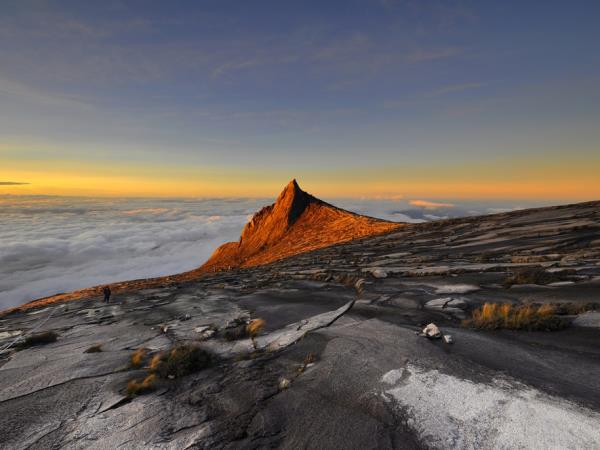
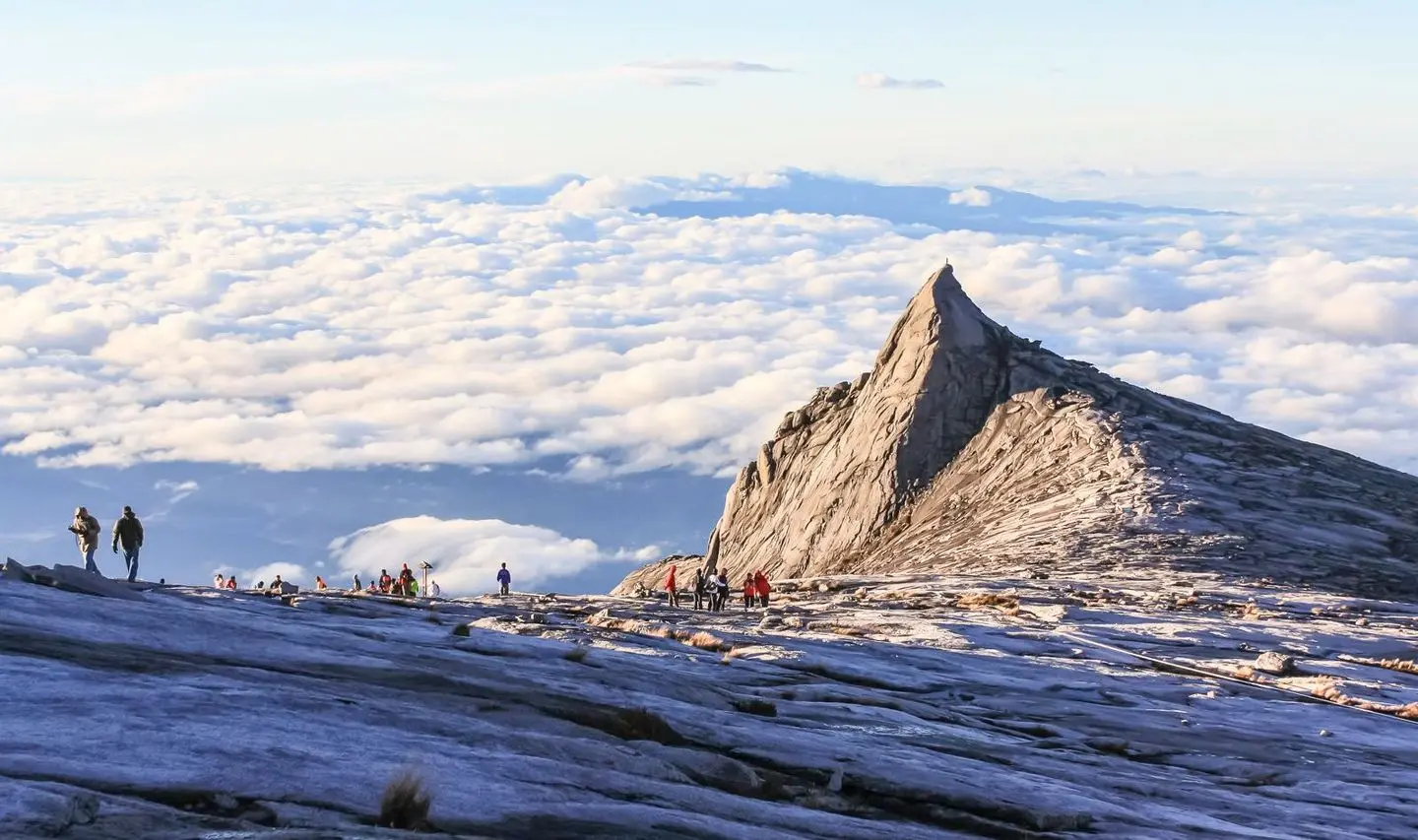
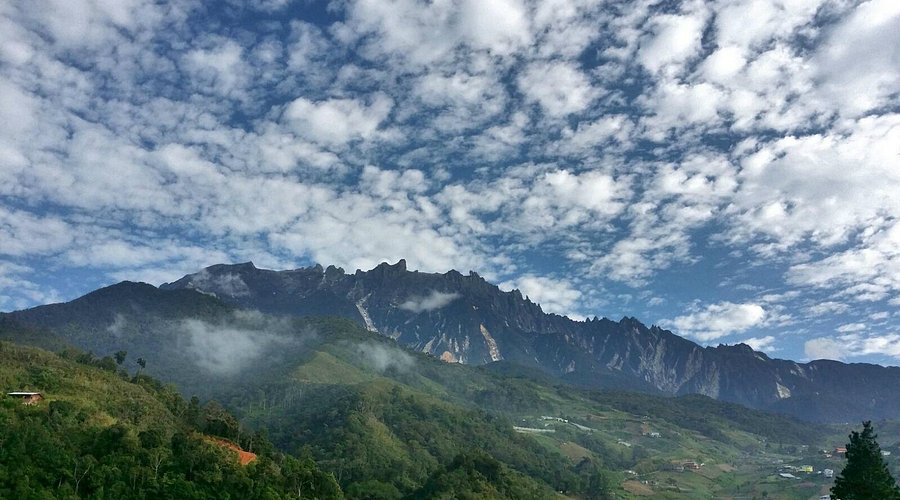
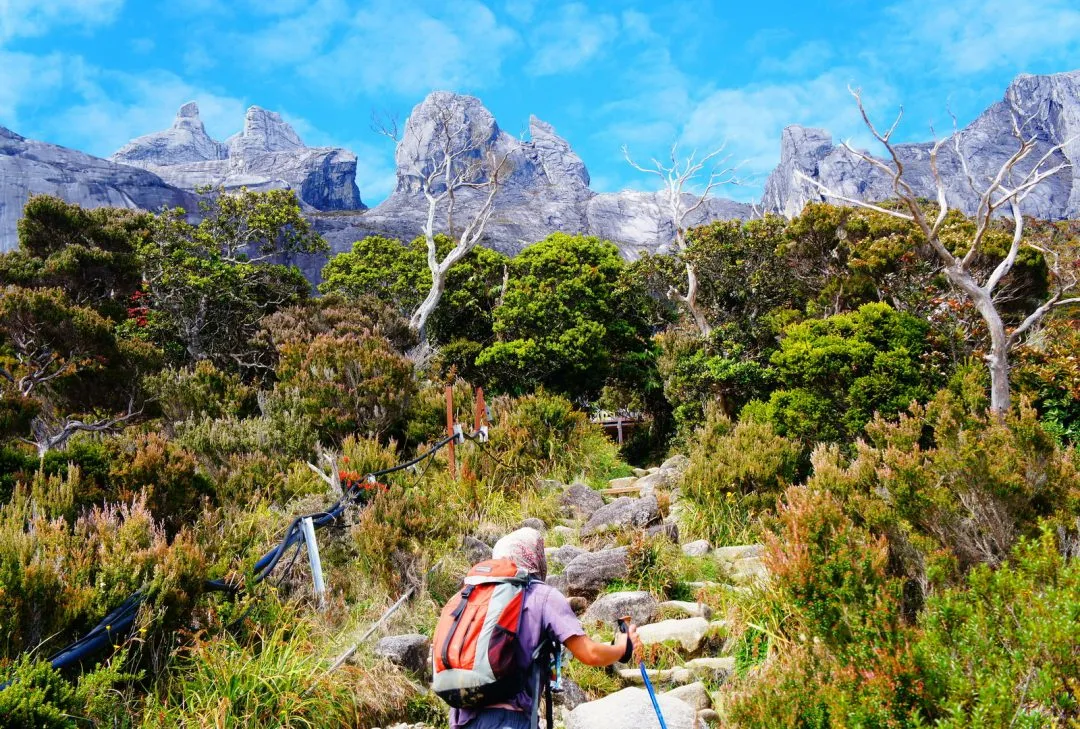
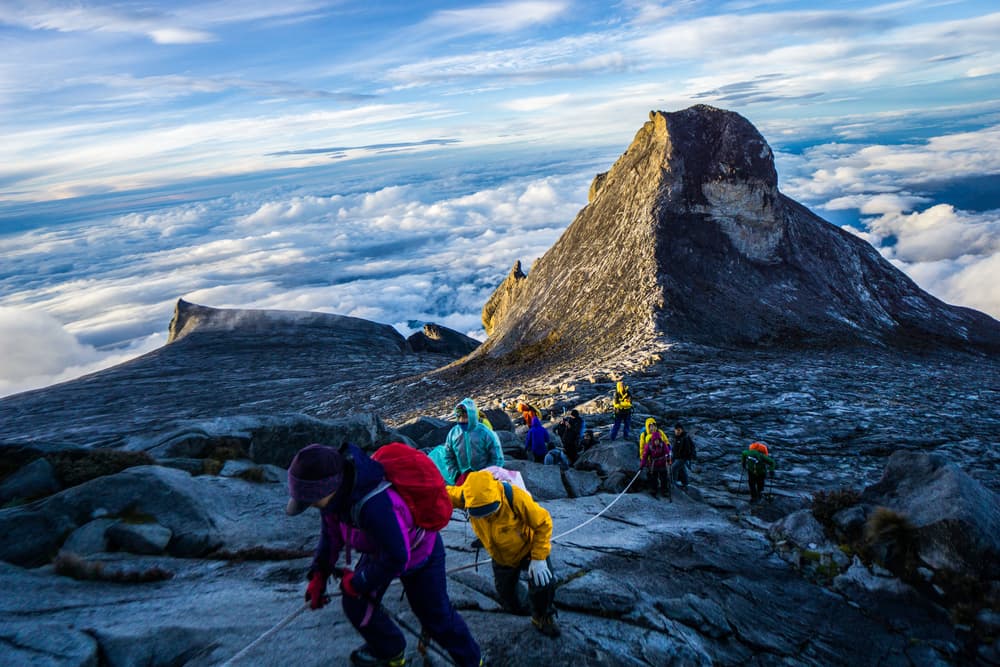
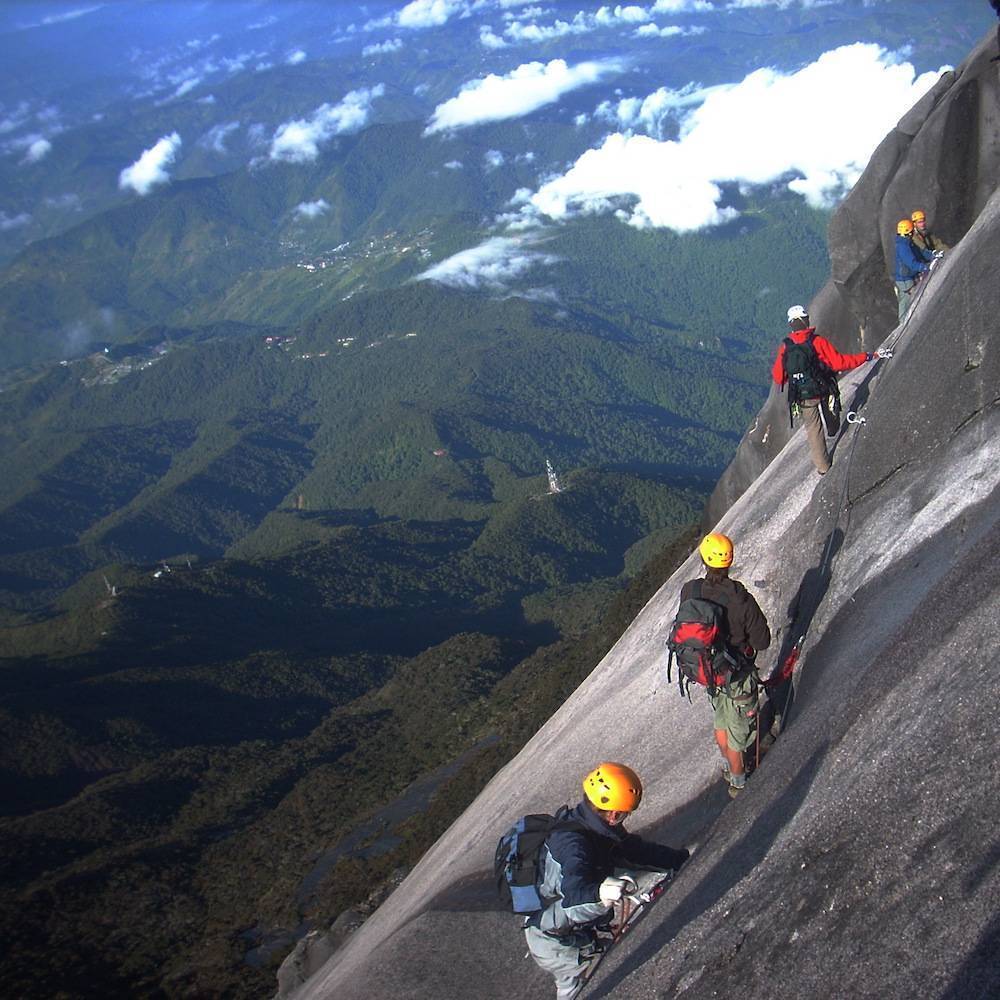
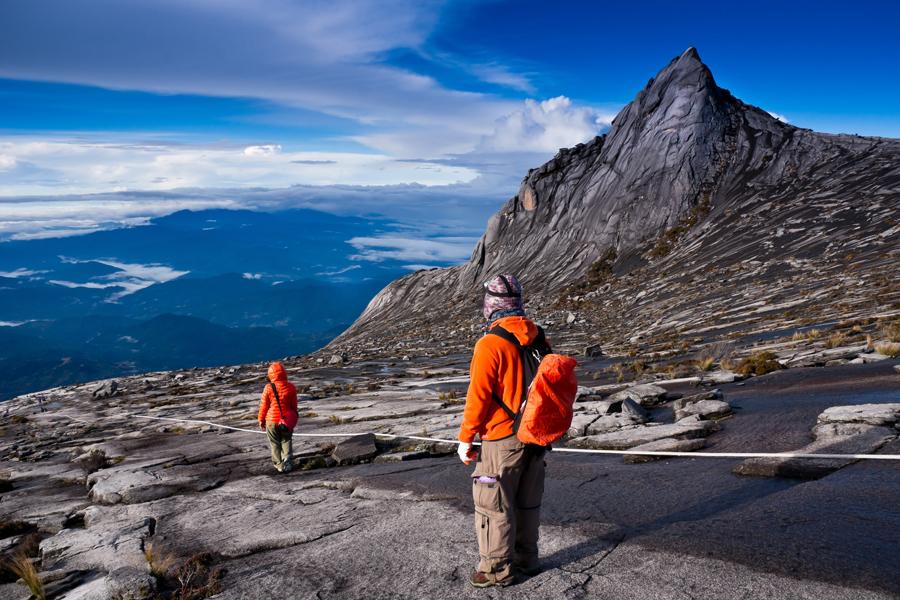
on mountain
+ Via Ferrata trainer
Return transfers
2 nights
to Hard
2 Nights
Food & Cuisine
Mountain hut-style meals are provided during the climb: lunch on Day 2, buffet dinner at Laban Rata Resthouse both nights, an early supper before the summit push, and breakfast after descent. Meals are simple but hearty. Dietary needs can be accommodated with advance notice — bringing personal snacks is recommended.
Accommodation
You arrange your own hotel in Kota Kinabalu on arrival (Day 1). On the mountain, you stay two nights at Pendant Hut (3,289m) — dormitory style, exclusively for via ferrata participants. Bedding and sleeping bags are provided. There is no heating — warm layers are essential. Showers are cold or solar-heated.
Fitness & Difficulty
No prior mountaineering experience is required, but strong fitness is essential. The summit push at 2am covers exposed granite in cold, dark conditions. The via ferrata demands upper-body strength, balance, and comfort with heights. Train regularly for 6–8 weeks before: stair climbing, squats, lunges, and cardio endurance.
Daily Distances — Low's Peak Circuit
Day-by-Day Itinerary
Welcome to Sabah! Most climbers arrive in Kota Kinabalu via Kuala Lumpur and make their own way to their chosen hotel in the city. Spend the evening settling in, sampling local food along the waterfront, and resting before the adventure begins.
Our team picks you up from your hotel and transfers you to Kinabalu Park HQ, where you meet your mountain guide, register, and prepare for the climb. After a quick briefing, the ascent begins through lush rainforest filled with orchids, pitcher plants, and sweeping valley views.
Upon arrival at Pendant Hut, enjoy a hot meal, meet the via ferrata trainers, and receive your mandatory safety briefing and equipment orientation. Rest early — tomorrow brings the summit push.
Pendant Hut is the exclusive overnight stay for via ferrata participants.
The big day. You begin the final ascent before dawn, crossing open granite slabs and steep switchbacks under a canopy of stars. Reaching the summit at sunrise is unforgettable — a glowing horizon, a sea of clouds, and panoramic views stretching across Borneo.
After celebrating at the top, your adventure continues as you descend to the via ferrata entry point.
Low's Peak Circuit Via Ferrata
Considered one of the highest via ferratas in the world, the Low's Peak Circuit features:
After completing the circuit, return to Pendant Hut for rest, a warm drink, and a well-earned meal.
Enjoy a relaxed breakfast at Pendant Hut before beginning your descent through the forest trail. You move from alpine granite back into lush rainforest, with stops to admire viewpoints, flora, and waterfalls.
At Timpohon Gate, our transport picks you up for the drive back to your hotel or directly to Kota Kinabalu International Airport. Your Mt Kinabalu via ferrata adventure ends here — fitter, stronger, and with an achievement you'll carry for life.
What's Included
✅ Included
- ✓Official climbing permits, park registration & via ferrata participation fees
- ✓Return transfers: Kota Kinabalu hotel ↔ Kinabalu Park HQ ↔ hotel/airport
- ✓2 nights at Pendant Hut (dormitory, bedding & sleeping bags provided)
- ✓Lunch on Day 2 (ascent)
- ✓Buffet dinner at Laban Rata Resthouse (both nights)
- ✓Early supper at Pendant Hut before summit push
- ✓Breakfast after via ferrata descent
- ✓Certified Sabah Parks mountain guide for trek & summit
- ✓Via Ferrata trainer/guide for Low's Peak Circuit
- ✓Via ferrata equipment: helmet, harness, lanyards
- ✓High guide-to-climber ratio throughout
- ✓Kinabalu Park entrance & conservation fees
- ✓Climbing certificate upon successful summit & via ferrata completion
❌ Not Included
- ✗Accommodation in Kota Kinabalu (Day 1 & post-climb)
- ✗International & domestic flights to/from Kota Kinabalu
- ✗Personal clothing & gear (warm layers, rainwear, gloves, headlamp)
- ✗Travel & climbing insurance (high-altitude + via ferrata coverage required)
- ✗Porter fees (optional — available on request)
- ✗Alcoholic drinks, extra beverages or additional food
- ✗Optional activities or extra nights
- ✗Personal snacks (strongly recommended to bring your own)
Trip Information
Climate — Sabah & Mount Kinabalu
Sabah has a tropical climate with high humidity year-round. The best climbing window is February–September, during the drier northeast monsoon gap. The wet season (October–January) brings heavy rain and increases the risk of trail closures. On the mountain itself: hot and humid in the rainforest base (25–32°C), cool at Pendant Hut (~10–15°C), and cold to near-freezing at the summit during pre-dawn hours (0–5°C). Rain is possible at any time — waterproof gear is essential.
Time Zone
GMT +8 (same as Singapore, Kuala Lumpur, Hong Kong)
Language · Religion · Plugs
Bahasa Malaysia (official) · English widely spoken in Kota Kinabalu · Islam (official), Christianity (common in Sabah) · UK 3-pin plug Type G (Australia Type I adapter needed)
UNESCO Status
Kinabalu Park was declared a UNESCO World Heritage Site in 2000. It is one of the most biologically diverse areas in the world, home to over 5,000 plant species, 326 bird species, and the famous Rafflesia — the world's largest flower.
Visa
Most nationalities (Australia, UK, EU, NZ, Canada, USA) enter Malaysia visa-free for 30–90 days. Check your specific requirements at imi.gov.my. Passport must be valid for at least 6 months with at least one blank page. Note: Sabah is a separate immigration zone — you may need to re-clear immigration upon arrival in Kota Kinabalu even if transiting through Kuala Lumpur.
Travel & Climbing Insurance
Mandatory. Your policy must cover: high-altitude trekking (to 4,095m), via ferrata activities specifically, medical evacuation and helicopter rescue, and trip cancellation. Standard travel policies often exclude adventure activities — check carefully or use a specialist provider.
Altitude Sickness (AMS)
At 4,095m, some trekkers may experience mild AMS symptoms (headache, nausea, fatigue). The two-night stay at Pendant Hut helps acclimatisation significantly. Inform your guide immediately if symptoms appear. Those with heart or lung conditions should consult their GP before booking.
Vaccinations
Recommended: Hepatitis A, Typhoid, Tetanus/Diphtheria, Measles-Mumps-Rubella. Consider: Japanese Encephalitis (for rural stays), Rabies (for extended travel). Sabah has low malaria risk in urban areas and Kinabalu Park itself — consult your travel health clinic for current advice.
Currency
Malaysian Ringgit (MYR). AUD 1 ≈ MYR 2.90–3.10 (check current rate). Cards are accepted in most hotels and restaurants in Kota Kinabalu. ATMs widely available. Cash recommended for markets, local eateries, and small shops.
Food & Drink in Kota Kinabalu
Local hawker meal: ~MYR 8–15 (≈ AUD 3–5) · Restaurant dinner: ~MYR 40–80 (≈ AUD 14–28) · Beer: ~MYR 15–25 (≈ AUD 5–9) · Bottled water: ~MYR 1–2 (≈ AUD 0.40–0.70)
Getting to Kota Kinabalu
Kota Kinabalu International Airport (BKI) is served by frequent direct flights from Kuala Lumpur (1h 50min), Singapore (2h 30min), and other Asian hubs. Book in advance for the best fares.
Group Pricing
Groups of 6 or more benefit from a reduced rate of AUD 1,850 per person. Contact us to arrange your preferred dates for a private group departure.
🧣 Head & Face
- Sun hat or cap (lower tropical section)
- Warm beanie (summit push — 0–5°C)
- Buff / neck gaiter
- Sunglasses (UV protection above clouds)
🥾 Feet
- Sturdy hiking boots with ankle support (mandatory for via ferrata)
- Light sandals or flip-flops for Pendant Hut
- 2–3 pairs lightweight synthetic socks
- 2–3 pairs warmer wool-blend socks (summit morning)
🧤 Hands
- Warm fleece gloves
- Waterproof / windproof gloves (summit)
- Optional: fingerless climbing gloves for via ferrata grip
🧥 Clothing
- 2 synthetic quick-dry T-shirts
- 1–2 long-sleeve quick-dry shirts
- 1 set thermal base layers (summit push)
- Fleece jacket (mid layer)
- Light down or insulated jacket (summit 0–5°C)
- Waterproof shell jacket (essential — rain common)
- Waterproof or quick-dry trekking pants (2–3 pairs)
- Lightweight sleepwear for Pendant Hut
🎒 Gear & Equipment
- Trekking poles (highly recommended for descent)
- Headlamp + spare batteries (mandatory — 2am start)
- Reusable water bottle or hydration bladder (1–1.5L)
- Small thermos (optional — hot drinks on summit)
- Small daypack (20–30L) + rain cover
- Light towel (showers are cold/solar)
💊 Health, Snacks & Personal
- Sunscreen (high SPF) + lip balm with SPF
- Personal medication
- Blister care (Compeed, tape)
- Basic toiletries
- Energy bars, nuts, dried fruit, chocolate
- Electrolyte tablets (helpful at altitude)
Previous trekking experience is helpful but not essential. Focus on the following for 6–8 weeks before your departure:
🏔 Uphill Training
Regular stair climbing or hiking with a loaded backpack. Aim for 45–60 min sessions, 3x per week. Simulate the elevation gain by using a stairmaster or stadium steps.
💪 Strength Training
Focus on legs and core: squats, lunges, step-ups, and planks. For the via ferrata, add upper-body work — pull-ups, rows, and grip exercises.
🫀 Cardio Endurance
Jogging, cycling, or swimming 3–4 times per week. Work up to 60+ minutes at moderate intensity. The summit push requires sustained aerobic effort over several hours in the cold and dark.
⚖️ Balance & Via Ferrata
Practice balance and coordination: single-leg exercises, lateral movements, and if possible, a local via ferrata or climbing wall. Comfort with heights is essential for the exposed traverse sections.
A few useful words in Bahasa Malaysia to connect with your guides and the local community in Sabah.
References
Ready to take on Mt Kinabalu?
A simple, structured path from first enquiry to summit. We take the guesswork out of adventure travel.
How It Works — Step by Step ↗